
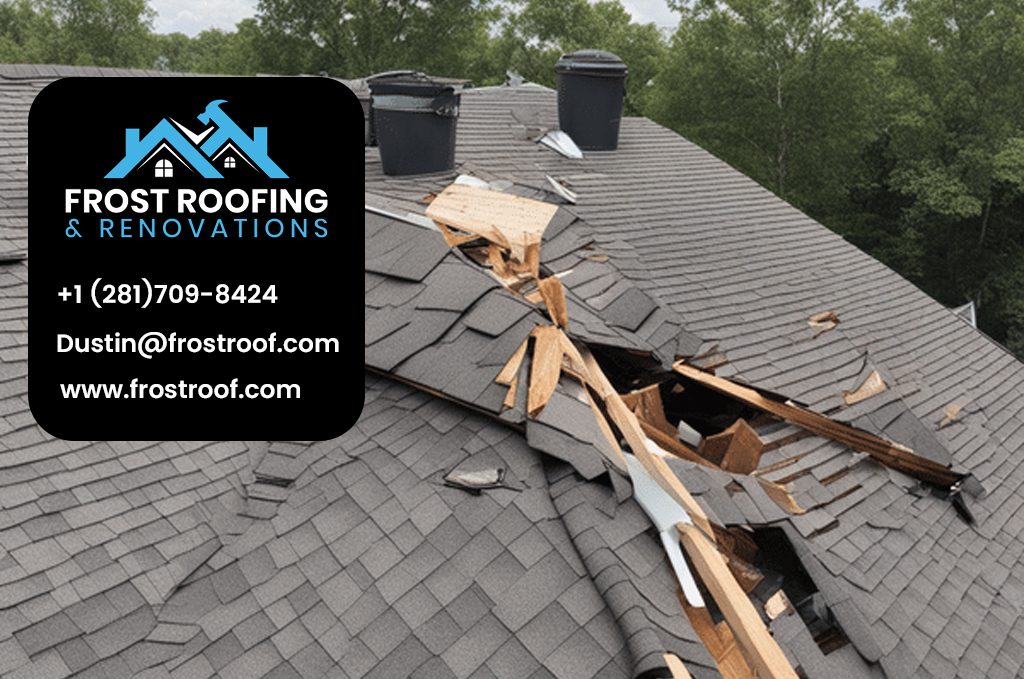
Texas weather can be wild and scary. From big hail to heavy rain, storms really hit our homes hard. If your roof was also damaged, you are not alone; thousands of Texans deal with this every year. Knowing what to do right after a storm can save you a lot of money and stress.
Navigating the aftermath requires more than just calling a contractor; the Independent Insurance Agents of Texas (IIAT) emphasizes that understanding your specific policy coverage for storm-related damage and taking immediate steps to mitigate further loss is the most effective way to ensure a smoother, faster claims experience
This guide explains what to do right after a storm, when to call for emergency roof repair after storm damage, how to document the problem, and when Frost Roof can help with roof repair, storm roof inspection, and insurance claim roof storm Texas support.
Why Texas Storm Damage Roof Repair Needs Fast Action
Texas weather can be hard on roofs. A storm may bring high wind, hail, heavy rain, flying debris, and sudden temperature changes in one night. The National Weather Service says severe thunderstorms can produce hail one inch or larger and wind gusts over 58 mph. Hail that size can damage roofs and vehicles, while strong wind can break branches, knock down trees, and cause structural damage.
After a storm, roof damage is not always easy to see. You may only notice a small ceiling stain days later. That small stain may point to a leak that started during the storm.
Fast roof repair helps prevent:
- Water entering your attic
- Mold growth
- Ceiling stains
- Damaged insulation
- Rotten decking
- Higher repair costs
- More stress during your insurance claim
If your home needs help now, check out our service for roof repair so a roofing team can inspect the problem and guide the next step.
First Step After a Storm: Stay Safe
Before thinking about repair, make sure your family is safe. Roof damage can wait a few minutes. Safety cannot.
Right after a storm:
- Stay away from fallen power lines
- Avoid standing water near electrical items
- Do not climb on the roof
- Watch for broken tree limbs
- Keep children and pets away from debris
- Check for leaks from inside the home
- Use buckets for active dripping if safe
If water is coming in, move furniture and valuables away from the leak. If the ceiling is sagging, stay out of that room. A wet ceiling can collapse without much warning.
Storm Roof Inspection: What to Check From the Ground
A storm roof inspection should be done carefully. You can do a simple ground-level check before a roofer arrives, but do not risk your safety.
Look for these signs:
| Area to Check | Storm Damage Signs |
| Roof surface | Missing, lifted, or curled shingles |
| Gutters | Granules, dents, pulling away |
| Attic | Damp wood, wet insulation, daylight showing |
| Ceilings | Brown stains, bubbling paint, soft drywall |
| Exterior walls | Water streaks or siding damage |
| Yard | Shingles, flashing, branches, or roof pieces |
| Vents and flashing | Bent metal, gaps, loose edges |
If you see any of these signs, schedule a professional inspection. Small signs can point to bigger problems under the surface.
For more helpful guidance, read roof repair tips to learn how to spot problems before they get worse.
What Texas Homeowners Should Know
Hail damage repair is common in many parts of Texas. Hail can hit shingles, vents, gutters, flashing, skylights, and siding. Some hail marks look small, but they can weaken the roof surface.
The NOAA National Severe Storms Laboratory explains that hail forms inside thunderstorm updrafts and can damage homes, cars, and other property.
Common hail damage signs include:
- Round marks on shingles
- Missing granules
- Dents on roof vents
- Dented gutters
- Cracked shingles
- Damaged flashing
- Marks on outdoor units or metal surfaces
The problem with hail is that it may not create an instant leak. It can weaken the shingle surface, then rain later finds the weak spot. That is why homeowners should not wait months after hail hits.
If you are unsure whether repair or replacement is better, read roof repair vs replacement for a simple comparison.
Wind Damage Roof Repair: Signs You Should Not Ignore
Wind damage roof repair is just as important as hail damage repair. Strong wind can lift shingles, break seals, loosen flashing, and open small gaps where water can enter.
NOAA’s National Severe Storms Laboratory notes that damaging thunderstorm winds account for about half of all severe reports in the lower 48 states and are more common than tornado damage. It also says wind speeds can reach up to 100 mph and create long damage paths. (NOAA National Severe Storms Laboratory)
Watch for these wind damage signs:
- Shingles missing from one side of the roof
- Lifted roof edges
- Loose ridge caps
- Bent flashing
- Exposed underlayment
- New leaks after wind
- Tree branches on the roof
- Gutter sections pulled loose
Wind can damage one roof area while leaving another area untouched. That is why a full inspection matters.
For more Texas-specific roof protection tips, read roofing for Texas weather.
Roof Storm Damage Katy: What Local Homeowners Should Do
Roof storm damage Katy homeowners face can include hail hits, heavy rain leaks, shingle loss, and wind-lifted roof edges. Katy storms can arrive fast, and neighborhoods may see different levels of damage even from the same storm.
After a storm in Katy, take these steps:
- Check your home from the ground.
- Look inside for ceiling stains or water marks.
- Take photos of visible damage.
- Save photos of hail, broken branches, or shingles in the yard.
- Call a roofing professional for a storm roof inspection.
- Contact your insurance company if damage is serious.
- Keep repair receipts and inspection notes.
Frost Roof serves Texas homeowners in many areas, including Katy, Houston, League City, Pearland, Webster, Dickinson, Clear Lake, Missouri City, Friendswood, Galveston, Santa Fe, Spring, The Woodlands, and Humble.
If you are near Katy, you can also explore roofing services in Katy.
Emergency Roof Repair After Storm Damage
Some storm damage can wait a short time for inspection. Other damage needs emergency roof repair after storm problems appear. You can call for emergency help if you face following situations:
- Water is actively leaking inside
- A tree hit the roof
- Shingles are missing in a large area
- The roof deck is exposed
- The ceiling is sagging
- You see daylight through the attic
- Flashing has pulled away
- A large branch is stuck on the roof
Emergency repair often means stopping water entry first. This may include tarping, sealing a leak area, or protecting an opening until full repair can happen.
Do not try to tarp a steep, wet, or damaged roof yourself. It is safer to call trained roofers.
If the damage feels urgent, check out our service for emergency roof repair.
What To Do If Your Roof Is Leaking After a Storm
A roof leak after a storm can feel scary, but a calm plan helps.
Start with these steps:
- Put a bucket under the drip
- Move furniture and electronics away
- Take photos of the leak
- Take photos of wet ceilings or walls
- Do not poke a sagging ceiling unless guided by a pro
- Turn off electricity in the affected area if water is near outlets
- Call a roofer for inspection
A leak may come from shingles, flashing, vents, valleys, skylights, or damaged roof decking. Water can also travel before it shows up inside, so the wet ceiling spot may not be directly under the roof opening.
For more help, read how to repair a roof leak and understanding roof leaks.
How to Document Storm Roof Damage
Good documentation helps you understand the damage and can also help with an insurance claim roof storm Texas situation. The Texas Office of Public Insurance Counsel (OPIC) strongly advises homeowners to document all damage through photos and video and to save receipts for any emergency repairs, as this documentation is essential for streamlining your insurance claim process and ensuring you receive a fair settlement.
Hence, it is recommended to take photos of:
- Missing shingles
- Dented gutters
- Damaged vents
- Water stains
- Wet insulation
- Fallen branches
- Shingles in the yard
- Broken flashing
- Damaged siding
- Any temporary repair work
Also write down:
- Storm date and time
- What you noticed first
- Rooms with leaks
- Areas with ceiling stains
- Any emergency repairs
- Names of contractors who inspected the roof
- Receipts for tarps, cleanup, or temporary repairs
Do not throw away damaged materials before taking photos. If possible, save receipts and written estimates.
For more Texas claim guidance, check out our service for insurance claim services.
Insurance Claim Roof Storm Texas: What to Know
An insurance claim roof storm Texas process can feel confusing. Many homeowners are not sure whether to call a roofer first or insurance first.
A smart order is often:
- Make sure everyone is safe.
- Stop active water damage if possible.
- Document visible damage.
- Schedule a professional roof inspection.
- Review your policy or deductible.
- Contact your insurance company if the damage may be covered.
- Keep all records and photos.
Remember, insurance coverage depends on your policy, roof condition, cause of damage, deductible, and location. If flood damage is involved, that may be separate from wind or roof coverage.
Should You Repair or Replace the Roof After Storm Damage?
Not every storm-damaged roof needs full replacement. Some roofs only need small repairs. Others have widespread damage and may need replacement.
Repair may be enough when:
- Damage is limited to one small area
- Shingles are mostly in good shape
- Roof decking is dry and solid
- Flashing repair solves the leak
- The roof is not near the end of its life
Replacement may be better when:
- Damage is spread across the roof
- Many shingles are missing or cracked
- Roof is old and brittle
- Decking is damaged
- Leaks keep coming back
- Repair cost is close to replacement cost
A professional inspection can help you decide. You can learn more in roof repair vs replacement.
Best Roofing Materials for Texas Storms
Texas roofs face heat, wind, hail, and heavy rain. Choosing the right material matters when repair turns into replacement.
Common choices include:
- Asphalt shingles
- Metal roofing
- Tile roofing
- Impact-resistant shingles
- TPO for some flat or commercial roofs
Each material has pros and cons. Asphalt shingles are common and affordable. Metal roofing can offer long-term strength and heat reflection. Some impact-resistant options may help in hail-prone areas.
For deeper material guidance, read best roofing material for Texas weather and resilient roofing materials.
How to Prevent Future Storm Roof Problems
You cannot stop Texas storms, but you can prepare your roof.
Helpful maintenance steps include:
- Clean gutters
- Trim branches near the roof
- Check flashing around vents and chimneys
- Replace loose shingles early
- Keep attic ventilation working
- Schedule regular roof inspections
- Fix small leaks quickly
- Look for granules in gutters after storms
Routine roof care helps your roof last longer and makes storm damage easier to spot.
You can use the roof maintenance guide or read how often roof maintenance is needed for a simple plan.
How Long Does Storm Roof Repair Take?
Storm roof repair time depends on the damage.
Small repairs may take a few hours. Larger repairs can take one or more days. If many homes in your area were damaged by the same storm, scheduling may take longer because roofers are busy.
Things that affect timing include:
- Weather after the storm
- Roof size
- Roof slope
- Material type
- Damage level
- Insurance inspection timing
- Material availability
- Safety concerns
For a more detailed breakdown, read roof repair timeline.
Avoid These Mistakes After a Texas Storm
After a storm, many homeowners make rushed decisions. Try to avoid these mistakes:
- Climbing on a wet roof
- Ignoring small leaks
- Waiting weeks to inspect the roof
- Throwing away damaged materials before photos
- Hiring a roofer with no written estimate
- Paying large amounts upfront
- Letting water sit inside the home
- Forgetting to check gutters and attic
- Assuming no leak means no damage
A calm plan helps you protect your home and your budget.
If you want a starting point, request a free roofing estimate.
Frost Roof Service Areas in Texas
Frost Roof helps homeowners and property owners across many Texas communities. Service areas include:
- Houston
- League City
- Pearland
- Katy
- Webster
- Dickinson
- Clear Lake
- Missouri City
- Friendswood
- Galveston
- Santa Fe
- Spring
- The Woodlands
- Humble
You can view local pages for Houston roofing, League City roofing, and Pearland roofing.
For local reviews and business details, see the Frost Roof Google Business Profile.
The End
Storm damage roof repair should never be ignored in Texas. Hail can weaken shingles. Wind can lift roof edges. Heavy rain can find small openings and turn them into leaks. The faster you act, the easier it is to protect your home.
Start with safety. Check the roof from the ground. Take photos. Look inside for leaks. Schedule a storm roof inspection. If water is coming in, ask for emergency roof repair after storm damage right away.
Frost Roof helps Texas homeowners with roof repair, storm inspections, leak repair, insurance claim roof storm Texas support, and roofing services built for local weather.