
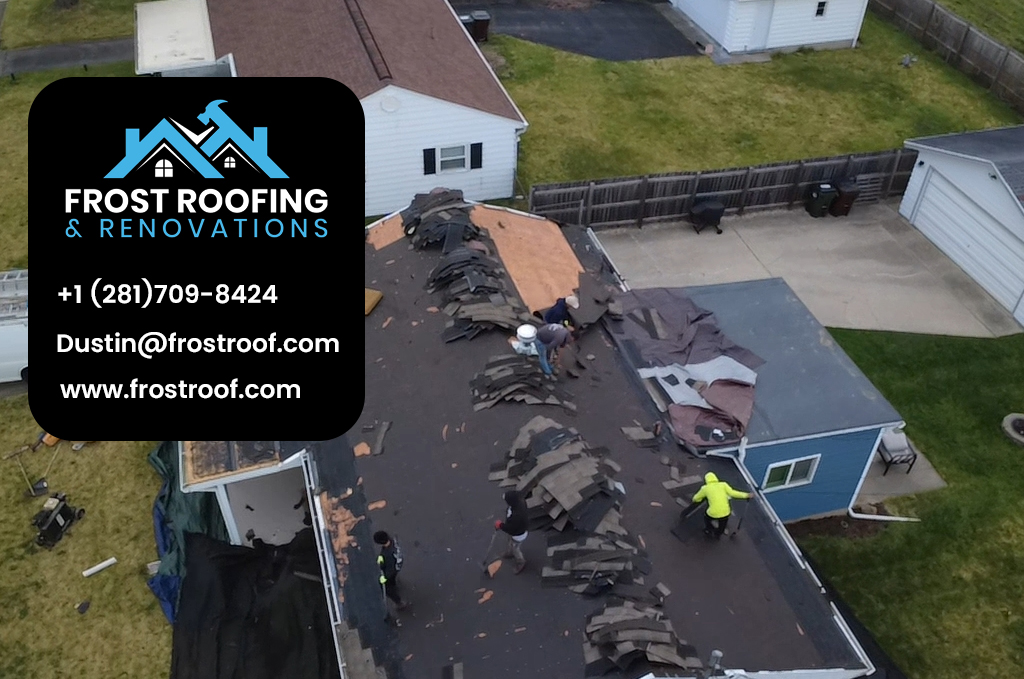
Why the Timeline Question Matters
When your roof is damaged, the first question most homeowners ask isn’t “how much will it cost?” — it’s “how long will this take?” You have a family living in the home, a schedule to manage, and possibly water actively coming in. You need answers, not estimates wrapped in maybes.
The truthful answer is: it depends — but there are clear patterns by repair type. A minor shingle replacement and a storm-damaged roof that needs structural work are completely different projects. Treating them the same way leads to unrealistic expectations on both sides.
This guide breaks down roof repair timelines by repair type so you know exactly what to expect — from the moment you call a roofing contractor to the day the job is complete. Whether you’re dealing with a small leak, hail damage across the entire roof, or an emergency situation after a Texas storm, this timeline guide gives you clarity.
What Affects How Long a Roof Repair Takes?
Before the repair-by-type breakdown, it helps to understand the variables that can speed up or slow down any roofing project:
- Scope and Severity of Damage A two-shingle replacement takes hours. Full deck replacement after widespread moisture damage takes days. The extent of damage is the single biggest timeline driver.
- Roof Size, Pitch, and Complexity A large, steeply pitched roof with multiple valleys, dormers, chimneys, and skylights requires more labor time than a simple gable roof. Every penetration and transition point adds setup and flashing time.
- Weather Conditions Roofing work cannot safely or effectively proceed in rain, high winds, or lightning. In Texas — where afternoon thunderstorms can roll in quickly — weather delays are a routine part of scheduling. Contractors typically monitor forecasts closely and build buffer days into project timelines.
- Material Availability Standard asphalt shingles in common colors are almost always in stock. Custom colors, specialty materials, or specific manufacturer product lines may require 3–7 days of lead time before work begins.
- Permit Requirements Most roof repairs in Texas do not require permits. Full replacements and structural repairs often do. When permits are required, they typically add 2–5 business days to the project start date.
- Discovery of Hidden Damage Once old shingles and underlayment are removed, contractors sometimes find damaged decking, rotted rafters, or moisture damage that wasn’t visible during the initial inspection. This is common — and addressing it properly adds time but prevents future failures.
- Contractor Scheduling After major weather events in Texas, roofing contractors become heavily booked. Scheduling lag of 1–3 weeks is normal after a significant hailstorm or tropical system moves through the region.
Roof Repair Timeline by Repair Type
Minor Shingle Repair (1–5 Shingles)
Typical Timeline: 2–4 Hours (Same Day)
The most straightforward repair scenario: a few shingles have blown off, cracked, or been damaged by a falling branch. If replacement shingles matching your existing roof are available — which they usually are for common products — this is a same-day job.
What happens:
- Damaged shingles are carefully removed without disturbing surrounding courses
- Underlayment is inspected and patched if needed
- New shingles are installed, nailed, and sealed
- Flashing is checked at nearby transitions
What can delay it: Material matching (if your shingles are discontinued or an unusual color), poor weather, or discovery of soft spots in the decking beneath the damaged shingles.
If you’re in Houston or surrounding areas, Frost Roofing’s roof repair services in Texas handle minor repairs quickly with minimal disruption.
Flashing Repair or Replacement
Typical Timeline: 3–6 Hours (Same Day or Next Day)
Flashing — the metal strips that seal transitions around chimneys, skylights, vents, and wall junctions — is the most common single source of roof leaks. Flashing repairs require careful removal of surrounding shingles, replacement or re-sealing of the metal, and reinstallation.
What happens:
- Surrounding shingles are carefully removed and set aside (or replaced if damaged)
- Old flashing is removed and the substrate is inspected for moisture damage
- New flashing is cut, shaped, and installed with proper overlaps
- Counter flashing (at chimneys and walls) is re-secured
- Shingles are reinstalled and the area is sealed
What can delay it: Chimney flashing repairs are more complex and may take a full day, especially if the chimney masonry needs repointing. Skylight flashing with significant decking rot beneath can extend the timeline.
Roof Valley Repair
Typical Timeline: 4–8 Hours (1 Day)
Roof valleys — where two slopes meet — channel large volumes of water and are high-wear zones. Valley repair involves removing shingles from both sides of the valley, replacing valley flashing or membrane material, and reinstalling shingles.
What happens:
- Shingles on both sides of the valley are removed back to solid material
- Valley liner or metal flashing is inspected and replaced
- Decking in the valley is checked for moisture damage
- Shingles are reinstalled with proper overlap patterns
What can delay it: If the valley has been leaking for an extended period, decking rot may extend the repair into a partial structural fix.
Pipe Boot and Vent Collar Replacement
Typical Timeline: 1–3 Hours (Same Day)
Rubber pipe boots — the boots that seal around plumbing vent pipes — are among the most common leak sources on Texas roofs. UV radiation and heat cause the rubber to crack and separate within 10–15 years. Replacement is straightforward.
What happens:
- Old boot is cut away and surrounding shingles are temporarily lifted
- New boot is slid over the pipe and secured
- Surrounding shingles are re-secured and sealed
What can delay it: Very little. This is typically the fastest professional repair available. Multiple pipe boots being replaced simultaneously extends the time proportionally but remains a same-day job.
Partial Roof Repair (One Slope or Section)
Typical Timeline: 1–2 Days
When damage affects an entire slope or a large section of the roof — common after hail events, high-wind damage, or a falling tree limb — partial repair involves removing and replacing shingles across a defined section while integrating new material with the existing roof.
What happens:
- Damaged section is fully stripped to decking
- Decking is inspected and any damaged panels replaced
- New underlayment is applied
- New shingles are installed and integrated with existing courses at the repair boundary
- All flashing in the repaired section is inspected and replaced as needed
What can delay it: Material delivery timing, weather, and decking damage discovery. Matching shingles to an aged existing roof can also be a challenge — if a perfect match isn’t available, a larger section may need to be replaced for visual consistency.
This type of repair often follows storm events. Frost Roofing’s team covers storm damage restoration in Texas and can help document the damage for insurance purposes before work begins.
Emergency Roof Repair (Active Leak or Storm Damage)
Typical Timeline: Emergency Tarp/Temporary Protection — Same Day. Permanent Repair — 1–5 Days After
Emergency repairs follow a two-phase process. The first priority is stopping active water intrusion into the home. The second is permanent repair once conditions allow.
Phase 1 — Emergency Protection (Same Day):
- Contractor performs a rapid assessment to identify active leak points
- Heavy-duty tarps are secured over damaged areas using battens or weighted fasteners
- Interior water damage is assessed and documented
- Photos and measurements are taken for insurance purposes
Phase 2 — Permanent Repair (1–5 Days Later, Depending on Scope):
- Once weather clears and a full assessment is completed, permanent repair is scheduled
- Timeline depends on the scope discovered in the full inspection
After major Texas weather events — tropical storms near Galveston and Houston, hailstorms in The Woodlands and Spring, high-wind events in Pearland and League City — contractor schedules fill rapidly. Calling promptly after a storm event is critical.
Structural Roof Repair (Decking, Rafters, Ridge Board)
Typical Timeline: 2–5 Days
When water has infiltrated for an extended period — or when storm impact has caused structural damage — repairs go beyond surface materials into the framing beneath. This is the most time-intensive repair category.
What happens:
- Roofing material is stripped from the affected area
- Damaged decking panels are cut out and replaced with new OSB or plywood
- Rafter damage is assessed — sistering (adding new lumber alongside damaged rafters) or full rafter replacement may be needed
- Ridge board damage is repaired or replaced
- Once structural work is complete, underlayment, flashing, and new roofing material are installed over the repaired structure
What can delay it: Permit requirements (structural repairs often require permits in Texas), material delivery for lumber, and the extent of damage discovered once the surface layer is removed.
Important note: Structural roof repairs connected to interior damage — ceiling collapse, wet insulation, damaged drywall — may require coordinated work with interior contractors. Frost Roofing & Renovation handles both exterior and interior repairs, including sheet rock services and home renovation services, keeping everything under one contractor.
Fascia and Soffit Repair
Typical Timeline: 4 Hours to 2 Days (Depending on Linear Footage)
Fascia and soffit aren’t technically the roof surface — but they protect the roofline’s edges and are directly connected to roof performance and gutter function. Rotted or damaged fascia needs to be addressed before or alongside gutter work, and it often surfaces during roof inspections.
What happens:
- Gutters are temporarily removed (if present) to access the fascia
- Rotted or damaged sections are cut out
- New fascia boards are cut, fitted, and secured
- Soffit panels are replaced where damaged
- Gutters are reinstalled (or new gutters fitted if the old ones were also damaged)
- Paint or sealant is applied to protect new wood
Frost Roofing’s fascia repair services cover this work alongside guttering — keeping the full roofline system functioning correctly.
Quick Reference: Roof Repair Timeline Summary
| Repair Type | Typical Timeline |
| Minor shingle replacement (1–5 shingles) | 2–4 hours (same day) |
| Pipe boot / vent collar replacement | 1–3 hours (same day) |
| Flashing repair (non-chimney) | 3–6 hours (same day) |
| Chimney flashing repair | 4–8 hours (1 day) |
| Valley repair | 4–8 hours (1 day) |
| Emergency tarping (temporary protection) | Same day |
| Partial slope/section repair | 1–2 days |
| Emergency permanent repair | 1–5 days post-assessment |
| Fascia and soffit repair | 4 hours – 2 days |
| Structural repair (decking/rafters) | 2–5 days |
| Full roof replacement | 1–3 days (see below) |
Repair vs. Replacement: When Repair Is No Longer the Right Answer
Sometimes what appears to be a repair situation is actually a replacement situation in disguise. Here’s how to tell:
The repair is the right call when:
- Damage is isolated and the surrounding roof is in sound condition
- The roof is under 15 years old
- The cost of repair is significantly less than 30–40% of replacement cost
- No structural issues exist beneath the surface
Replacement makes more sense when:
- Multiple repair needs exist across different areas of the roof
- The roof is 20+ years old and nearing end of life
- Repair costs are approaching replacement cost
- Widespread granule loss, curling, or cracking is present
- A recent inspection has revealed decking issues in multiple locations
The problem with repeated patchwork repairs on an aging roof is that each new repair adds cost without addressing the underlying reality: the roof is at the end of its useful life. At some point, the math firmly favors replacement.
Frost Roofing offers residential roofing services in Texas including full replacements, re-roofing services for qualifying homes, and metal roofing services for homeowners who want a long-term, low-maintenance solution. For new builds, new roof installation in League City and surrounding areas is also available.
How Storm Damage Affects Repair Timelines in Texas
Texas’s storm frequency — hail events, tropical systems, high-wind thunderstorms — creates unique timeline dynamics that homeowners need to understand.
After a Regional Storm Event: When a major hailstorm or hurricane affects a large area, every roofing contractor in the region becomes heavily booked simultaneously. Scheduling windows that would normally be 2–3 days out can stretch to 2–3 weeks after a major event.
What to do immediately after storm damage:
- Document everything with photos before any cleanup
- Call your roofing contractor as soon as possible to get on the schedule
- If there is active water intrusion, request emergency temporary protection (tarping) — this can usually be done faster than full repair scheduling
- Contact your insurance company to begin the claim process
Frost Roofing provides insurance claim services in Texas to help homeowners navigate the documentation and claims process — ensuring that storm damage is properly recorded and that claims reflect the full scope of the damage.
Homeowners across Houston, Katy, Friendswood, Webster, Dickinson, Clear Lake, Missouri City, Humble, and Santa Fe should act quickly after weather events — contractor availability is first-come, first-served after regional storms.
What Homeowners Should Do While Waiting for Repairs
If there is a scheduling gap between your initial call and your repair date, here’s how to minimize damage in the interim:
Interior:
- Place buckets under active drip points
- Move furniture, electronics, and valuables away from affected ceiling areas
- Take photos of any water staining or interior damage for insurance documentation
- Do not pull down wet drywall or insulation until a contractor has assessed the situation
Exterior:
- Do not attempt to walk on a damaged or wet roof — this is a serious safety risk
- If a tarp is in place, check that it is still secured after wind events
- Do not apply DIY sealants or roofing cement to areas you cannot safely access — poorly applied temporary repairs can sometimes interfere with proper permanent repairs
Documentation:
- Keep a record of all rain events and any new interior symptoms (new drip points, expanding stains)
- Save all communication with your contractor and insurance company in writing
How to Speed Up Your Roof Repair Timeline
There are things within your control that can accelerate a repair project:
- Call Early Don’t wait for the second or third leak to call. Minor damage repaired early is almost always a same-day or next-day job. Waited-on damage can become multi-day structural work.
- Have Your Insurance Information Ready If there’s any possibility of an insurance claim, having your policy number, insurer contact, and claim history ready speeds up the documentation process.
- Provide Clear Access Ensure the contractor has clear vehicle access to the property, the attic access hatch is unobstructed for interior inspection, and pets are secured away from work areas.
- Make Decisions Promptly If a contractor discovers additional damage during the repair and needs approval for expanded scope, responding quickly keeps the crew on-site and the project moving.
- Choose a Full-Service Contractor A contractor who handles roofing, gutters, fascia, siding, and interior repairs doesn’t need to wait for other trades. Frost Roofing & Renovation’s full-service model — including guttering services, soffit repair, siding services, and painting services — means fewer scheduling handoffs and faster overall project completion.
Frequently Asked Questions: Roof Repair Timelines
How long does a roof repair take for a small leak? Most small, localized leaks — a failed pipe boot, a handful of damaged shingles, a cracked flashing seal — can be repaired in 2–6 hours on the same day a contractor is available. The repair itself is fast; scheduling is usually the bigger variable.
How long does emergency roof repair take in Texas? Emergency tarping to stop active water intrusion can usually be completed the same day you call. Permanent repair follows after weather permits and a full assessment is complete — typically 1–5 days after the emergency response, depending on damage scope.
Can a roof repair be done in one day? Yes — most standard repairs (shingle replacement, flashing, pipe boots, valley liner, minor partial repairs) are completed within a single work day. Structural repairs and larger partial replacements may extend to 2–5 days.
Does roof repair take longer after a storm? Yes. Contractor scheduling after regional storm events in Texas can stretch 2–4 weeks due to high demand. Emergency temporary protection is typically available faster than full repair scheduling.
How long does it take to repair a roof after a hailstorm? A professional assessment after a hailstorm can usually be scheduled within a few days. Actual repair or replacement timelines depend on the damage found, insurance claim status, and contractor availability. Getting on a contractor’s schedule quickly after a hail event is always recommended.
What’s the difference in timeline between roof repair and full replacement? Most repairs take hours to a few days. A full residential roof replacement in Texas typically takes 1–3 days of active work, depending on roof size and complexity. The scheduling lead time before work begins is often the longer variable for both.
How do I know if I need repair or full replacement? A professional inspection gives you the honest answer. Request a free estimate from Frost Roofing for a transparent assessment of whether repair or replacement is the right call for your specific situation.
Know the Timeline, Then Act Quickly
The fastest roof repair is the one you don’t delay. Small damage repaired promptly is a same-day job. The same damage left to spread through a Texas summer or storm season can become a multi-day structural project — or worse, a full replacement situation.
Understanding repair timelines helps you plan, set realistic expectations, and make informed decisions when a contractor gives you options. It also helps you act with appropriate urgency — because in Texas, where weather can go from clear to severe in an hour, a compromised roof is never a problem to put off until next week.
Ready to get your roof assessed? Request a free roofing estimate from Frost Roofing & Renovation, explore the full range of roofing and renovation services, or contact the team directly to schedule an inspection.
Frost Roofing & Renovation serves homeowners across Texas including Houston, Katy, Pearland, The Woodlands, Spring, Humble, League City, Webster, Friendswood, Clear Lake, Missouri City, Dickinson, Santa Fe, and Galveston. Visit the blog for more expert roofing guides.